
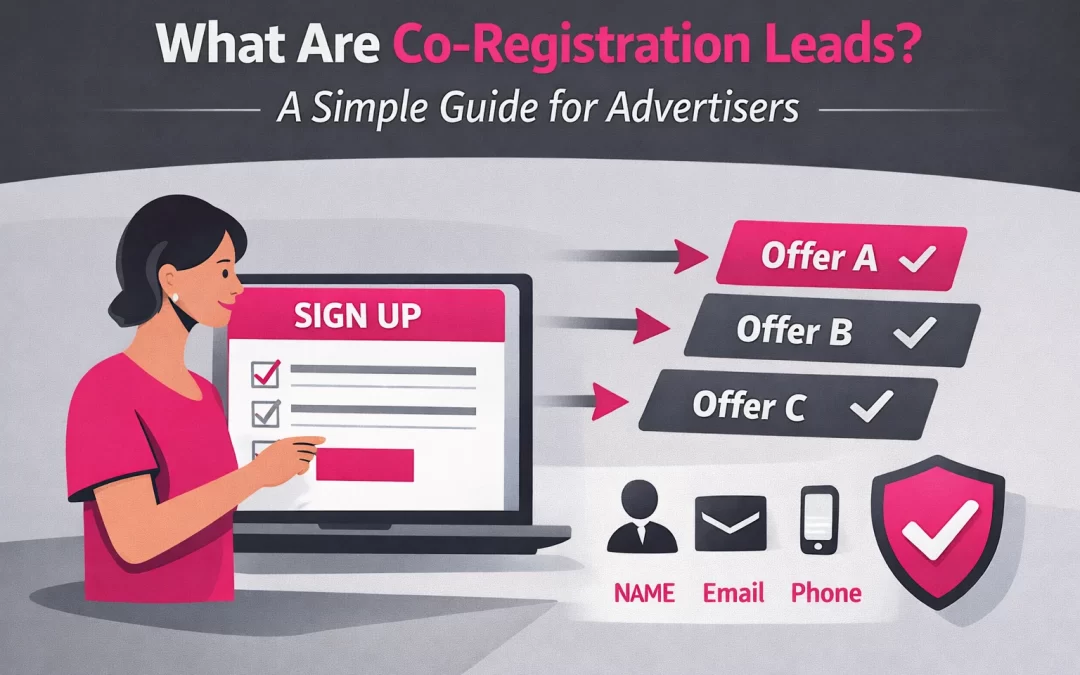
Co-Registration Leads
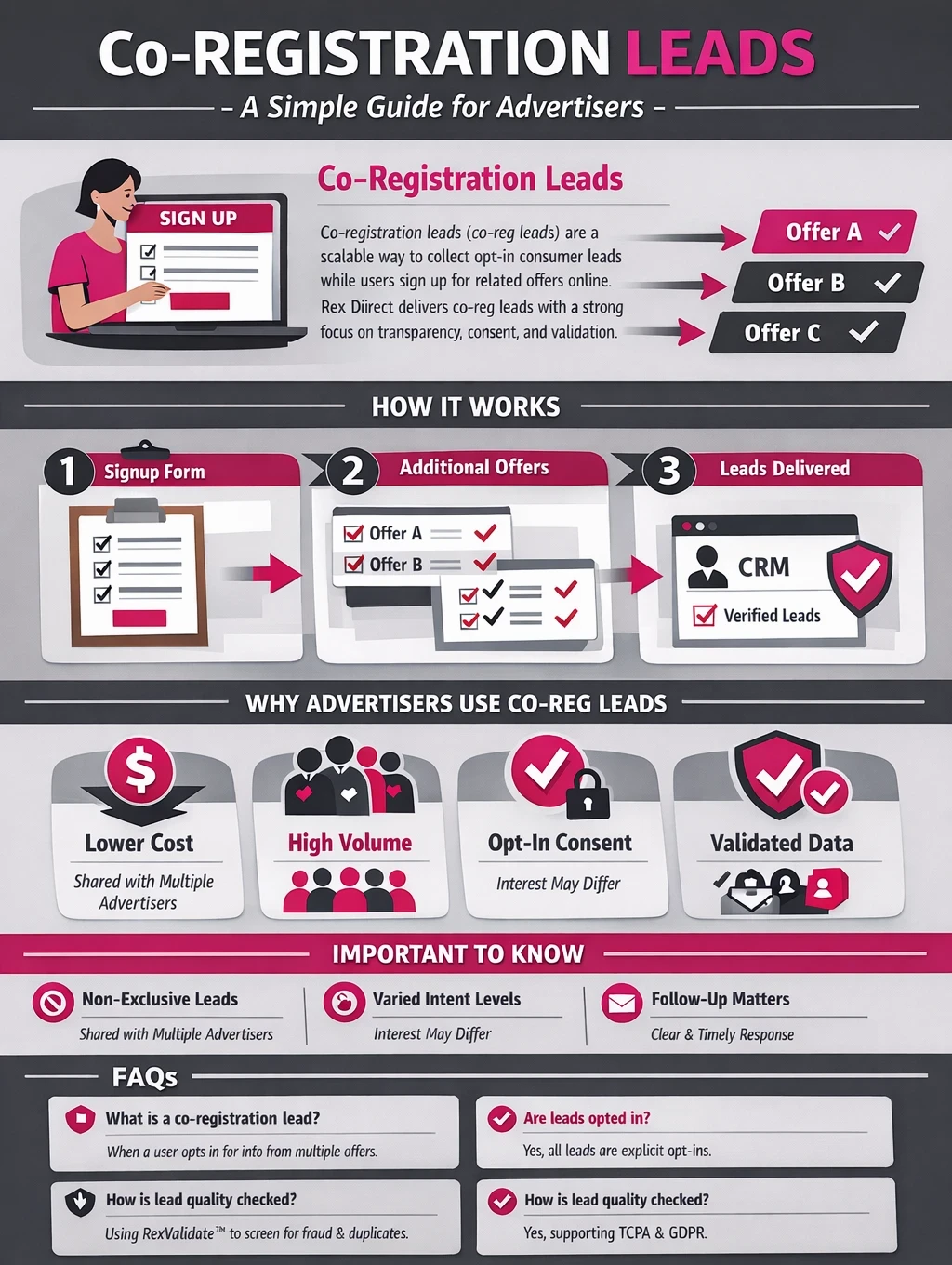
Co-registration leads (co-reg leads) are a scalable way to collect opt-in consumer leads while users sign up for related offers online. Rex Direct delivers co-registration leads with a strong focus on transparency, consent, and validation.
Instead of guessing where leads come from, Rex Direct helps buyers understand how and why each lead was generated.
What Are Co-Registration Leads?
Co-registration leads are generated when a consumer signs up for one offer and chooses to receive information from additional advertisers at the same time.
If the user opts in, their contact details (such as name, email, or phone number) are shared with those advertisers as leads.
With Rex Direct, co-registration is always:
- Explicitly opted in
- Clearly disclosed
- Tracked and validated
How Co-Registration Works at Rex Direct
- A consumer completes a form on a publisher’s site (for example, a quote request, newsletter signup, or content download).
- During that process, the consumer is shown additional relevant offers.
- The consumer actively opts in to receive information from those advertisers.
- Each opt-in creates a lead that is delivered through our lead distribution system real time to the client’s CRM
- Every lead is checked for basic quality signals such as duplicates, contactability, deliverability and fraud patterns.
Why Advertisers Prefer Co-registration Leads
Lower Cost Per Lead
Co-registration allows advertisers to acquire leads more efficiently compared to many single-source campaigns.
Scalable Volume
Co-reg is well suited for campaigns that require steady lead flow at scale.
Permission-Based Collection
All leads are generated through clear opt-in, supporting compliance with privacy and consent standards when implemented correctly.
Validation Built In
RexValidate™ helps reduce wasted spend by filtering obvious duplicates, invalid data, and suspicious submissions before delivery.
Important Things to Know
- Co-registration leads can be branded and sold exclusively
- Consumers may opt into more than one offer
- Intent levels can vary, depending on the offer and timing
- Clear follow-up and proper expectations matter
Frequently Asked Questions
What is a co-registration lead?
A co-registration lead is created when a user signs up for one offer and chooses to receive information from additional advertisers during the same form submission.
Are Rex Direct co-registration leads opted in?
Yes. All co-registration leads delivered by Rex Direct are collected through explicit opt-in with disclosure at the point of submission.
How does Rex Direct improve co-reg lead quality?
Rex Direct uses RexValidate™ to check for duplicates, invalid contact data, and common fraud indicators before leads are delivered.
Are co-registration leads compliant?
When properly disclosed and opted into, co-registration leads can support compliance requirements such as TCPA. Rex Direct provides transparency and documentation to support responsible use.
When should I use co-registration leads?
Co-registration leads are best for advertisers looking for cost-efficient scale, list growth, or top-of-funnel opportunities with clear follow-up processes via phone and/or email.
Tips for Choosing the Right Home Services Pay-Per-Lead Company for Your Contracting Business
Pay-per-lead marketing can help contractors generate steady opportunities — but only if the company supplying those leads knows what they’re doing. Choosing the wrong provider can result in poor data, unclear billing, and wasted time for your team. Here are the most important factors to consider before committing to a pay-per-lead partner.
1. Choose a Company With Experience in Home Services
Experience matters. A pay-per-lead company that understands home services will build their systems, forms, and traffic sources differently than companies focused on other industries.
Look for providers that have experience working with:
- Contractors, installers, and service professionals
- Local service areas and regional demand
- Seasonal trends common in home improvement
Companies with a history in home services are more likely to understand what information contractors actually need and how homeowners typically request services.
2. Ask How Leads Are Verified and Delivered
Even without advanced screening, basic verification is essential to avoid obvious issues.
A reliable lead provider should clearly explain:
- How contact information is checked for accuracy
- How duplicate submissions are filtered out
- How leads are delivered (email, CRM, webhook, dashboard, etc.)
This helps ensure your team isn’t wasting time chasing incorrect or repeated submissions.
3. Understand the Pricing and Billing Structure
Pay-per-lead pricing can vary, so transparency is critical.
Before signing up, confirm:
- How much each lead costs and what’s included
- Whether leads are sold exclusively or shared
- Billing frequency and minimum spend requirements
- How invalid leads are handled
Clear pricing and billing terms help you accurately forecast spend and ROI.
4. Evaluate the Company’s Track Record
A strong pay-per-lead provider should be able to demonstrate experience and stability.
Things to look for include:
- How long the company has been operating
- Case studies or examples from similar contractors
- Long-term relationships with buyers or partners
A proven track record often signals consistent systems, better support, and fewer surprises.
5. Review Transparency, Reporting, and Terms
Transparency protects both sides of the relationship.
Before committing, make sure the provider offers:
- Clear reporting and lead timestamps
- Visibility into lead delivery and billing
- Straightforward terms, payment thresholds, and cancellation policies
If important details are difficult to find or understand, that’s a warning sign.
Final Thoughts
The right pay-per-lead company should act like a long-term partner, not just a lead seller. Prioritize experience, transparency, and clear processes over flashy promises. When expectations are aligned, pay-per-lead marketing can become a dependable channel for growing your contracting business.
Frequently Asked Questions (FAQs)
What is a pay-per-lead company for home services?
A pay-per-lead company provides contractors with consumer inquiries for home services such as roofing, plumbing, HVAC, or remodeling. Contractors pay a fixed price for each lead they receive, rather than paying for ads or impressions.
How do pay-per-lead companies generate leads?
Pay-per-lead companies typically generate leads through online forms, search marketing, content websites, and partner traffic sources. When a homeowner submits their information requesting service, that information is delivered to one or more contractors as a lead.
Are all pay-per-lead companies the same?
No. Pay-per-lead companies vary widely in experience, lead sourcing methods, verification processes, and transparency. Some focus on specific industries like home services, while others operate across many unrelated verticals.
What should contractors look for in a pay-per-lead provider?
Contractors should look for:
- Experience in the home services industry
- Clear pricing and billing terms
- Basic lead verification and duplicate filtering
- Transparent reporting and delivery methods
- A proven operating history
How much do home services leads typically cost?
Lead costs vary based on service type, location, and competition. Highly competitive services or metro areas typically have higher lead prices, while smaller markets or less competitive services may cost less per lead.
Are pay-per-lead contracts long term?
Some providers require minimum monthly spends or long-term agreements, while others offer flexible or month-to-month options. Contractors should review contract terms carefully before committing.
How are leads delivered to contractors?
Leads are usually delivered by email, CRM integration, webhooks, or a secure dashboard. The delivery method should be fast, reliable, and easy for the contractor’s team to access and manage.
What questions should I ask before signing up?
Before choosing a pay-per-lead provider, contractors should ask:
- Where do the leads come from?
- How is contact information verified?
- Are leads exclusive or shared?
- How does billing work?
- What happens if a lead is invalid?